Sequestration’s Impact on PLWHA in the South

“While sequestration will have an impact on all ADAPs…it will have a significant impact on individuals living in the South. As of June 2012, southern states accounted for 33 percent of all ADAP clients served; through sequestration, up to half of the clients that will loss ADAP services reside in southern states.”

Budget sequestration is scheduled for today.  In other words, “a series of automatic, across-the-board cuts to government agencies, totaling $1.2 trillion over 10 years,” and split evenly between defense and domestic discretionary spending, will take effect. (Source)

Overall, budget sequestration will reduce funding for HIV/AIDS programs, “greatly compromise state health departments’ ability to implement programs,” and “erode the nation’s ability to meet the goals of the National HIV/AIDS Strategy (NHAS).”  (Source) Specifically, the National Alliance of State & Territorial AIDS Directors (NASTAD) estimates in The Impact of Budge Sequestration on Federal Funding for State HIV/AIDS and Viral Hepatitis Programs in FY2012 that, if sequestration occurs:

  • ADAP will face an estimated $77 million in cuts, impacting 15,708 clients.
  • Ryan White Part B to state health departments will face cuts of approximately $25 million.
  • Funding for enhanced HIV testing will face approximately $5.4 million in cuts, which will lead to an estimated 412 HIV+ individuals not being identified each fiscal year.
  • Health departments’ HIV surveillance efforts will face approximately $9.7 million in cuts.

Additionally, a new report, The Effect of Budget Sequestration on HIV/AIDS in the United States: Protecting the Human Impact in Fiscal Year 2013, by The Foundation for AIDS Research (amfAR) and the National Minority AIDS Council (NMAC), estimates that:

  • Over 6,760 PLWHA of color will loss access to ADAP (of the approximately 10,130 PLWHA that amfAR and NMAC estimate will loss access to ADAP).
  • Under the Housing Opportunities for Persons with AIDS Program (HOPWA), an estimated 1,360 fewer households will receive permanent housing and 1,780 fewer will receive short-term assistance.  Notably, “1,920 households that include at least one person of color [will] lose HOPWA housing services; 580 households that include at least one Hispanic person [will] lose housing services.”
  • The National Institutes of Health (NIH) will face approximately $163 million in cuts to AIDS research funding. Specifically, “297 AIDS research grants [will] go unfunded, including 32 specifically funding AIDS vaccine research.”
  • CDC-funded state and local prevention efforts will face more than $41.7 million in cuts.

Additionally, the impact of ADAP cuts will be disproportionately felt by the South. NASTAD recently released a one-page fact sheet entitled, The Devastating Impact of Sequestration on ADAP in the South: Sequestration Would Leave Thousands of People without Access to Life-saving Medications.  This fact sheet highlights that, of the approximately 15,000 clients losing access to ADAP, “[a]lmost half of the people that will be disenrolled live in the South, which as of 2010 accounted for 45 percent of all new AIDS diagnoses in the U.S.”  (Source)  Specifically:

  • In Florida, it is anticipated that more than 1,000 clients will be impacted.
  • In North Carolina and Texas, it is anticipated that 301-1,000 clients will be impacted.
  • In Georgia, South Carolina, and Tennessee, it is anticipated that 201-300 clients will be impacted.
  • In Alabama, Louisiana, Kentucky, Oklahoma, and Virginia, it is estimated that 101-200 clients will be impacted.
  • In Arkansas, Mississippi, and West Virginia, it is estimated that less than 100 clients will be impacted.

Many southern states will also not be expanding Medicaid (Source), which would “provide coverage for the many people living with HIV in South who are currently uninsured.”  (Source)  ADAP underfunding will thus have far reaching consequences, including the exacerbation of existing structural barriers to health, as well as an increase in new infections, “particularly in the South and among people of color who are already disproportionately impacted by the HIV epidemic.”  (Source)
Posted in Advocacy | Tagged , , , , , , , , | Leave a comment

New SASI Report analyzes HOPWA funding formula and concludes that the South Receives Disproportionately Lower HOPWA Funding Than Other Regions

Housing Opportunities for Persons with AIDS (HOPWA) is a HUD program that provides States and cities with approximately $330 million in funding for the housing needs of persons with AIDS (~$300,000,000 for entitlement grants and ~$30,000,000 for competitive grants).  HUD uses a formula based on cumulative AIDS cases to distribute approximately $225 million of the $300 million entitlement grants to cities and states for short-term and long-term housing for over 61,000 households.  Because over half of the individuals included in cumulative AIDS cases are deceased individuals, the distribution is not representative of the current state of the disease.  If HUD used a formula based on the number of persons living with HIV/AIDS instead of a formula based on cumulative AIDS cases, the south would receive 4.1% more funding, or ~$9.23 million.

Posted in Advocacy, HOPWA | Tagged , , , | 1 Comment

“Everyone has role to play in ending HIV epidemic in America.”

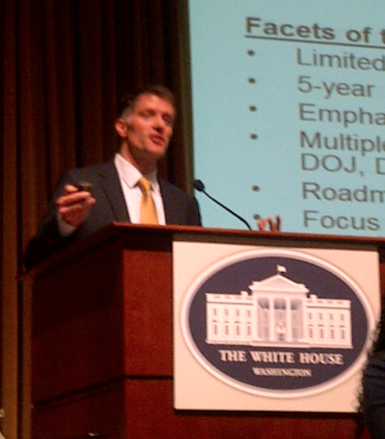
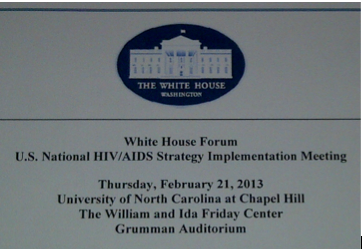
February 22, 2012: Today, a few members of SASI, including SASI Director Carolyn McAllaster, attended the National HIV/AIDS Strategy (NHAS) Implementation Assessment meeting in Chapel Hill, North Carolina. At this meeting, Dr. Grant Colfax, Director of the Office of National AIDS Policy (ONAP) and Dr. Ron Valdiserri, Director of the Office of HIV/AIDS and Infectious Disease Policy at the U.S. Department of Health and Human Services (HHS), addressed steps taken to fulfill the goals of the NHAS, as well as next steps and challenges. 

Screen shot 2013-02-21 at 11.29.05 PM

An Update on the National HIV/AIDS Strategy

“Don’t Get Mad, Get Data”: Dr. Grant Colfax emphasized that the NHAS is an evidence-driven strategy that has galvanized the national response to the HIV epidemic. ONAP advises President Obama on domestic HIV issues, while a wide range of federal partners, including the Department of Justice, implement various aspects of the strategy.

The NHAS aims to achieve a more coordinated response to the HIV epidemic among federal agencies, and between federal, state, and local stakeholders. ONAP has been focusing on both (1) areas with high AIDS concentrations and (2) communities most impacted by health disparities, including gay men, MSMs, and people of color. Specifically, MSM and gay men account for 2/3 of all new infections, and in 2010, 44% of new infections were among Black individuals and 21% were among Latinos. Black women account for half of new infections among all women. And, according to the CDC’s Greg Millett, “[a]lthough black MSM account for less than 1% of the U.S. population, they comprise one in four of new infections every year.” [Source]

Screen shot 2013-02-21 at 11.30.23 PM

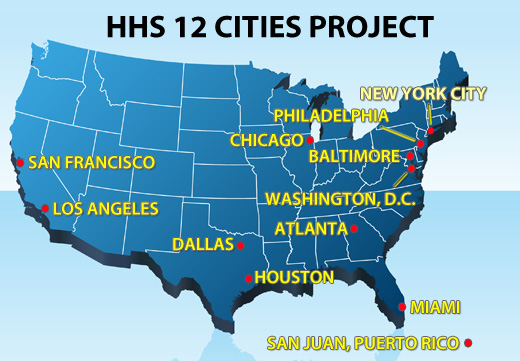
The 12 Cities Project: Dr. Colfax discussed the 12 Cities Project, which focused on U.S. urban areas with the highest AIDS prevalence, including Atlanta, Dallas, Houston, Miami, and Washington, DC. Highlights of the 12 Cities Project discussed today included communication and collaboration between federal, state, and local entities; an alignment of data collection; and an enhanced focus on outcomes, as opposed to process. Now one of the project’s primary focuses is sustainability. The full 12 Cities Project evaluation can be found here.

12CitiesMapv5

[Image Source]

NHAS Next Steps: A Focus on HIV/AIDS among Minorities; CAPUS Grants

While the 12 Cities Project focused on areas of high AIDS prevalence, the Care and Prevention in the United States (CAPUS) grants, part of the Secretary’s Minority AIDS Initiative, focus on enhancing HIV/AIDS diagnosis, and linkage to and retention in care, among minority communities most impacted by the epidemic. Eight grants were awarded–six to Southern states, including Georgia, Louisiana, Mississippi, North Carolina, Tennessee, and Virginia. Illinois and Missouri also received CAPUS funding.

The HIV/AIDS Treatment Cascade: “We can’t treat our way out of the epidemic, but we must treat to end epidemic.” (Dr. Colfax)

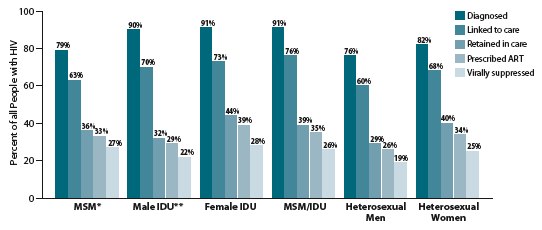
Both Dr. Colfax and Dr. Valdiserri emphasized the HIV/AIDS treatment cascade, which illustrates the stark gaps between those diagnosed with HIV and those who have a suppressed viral load. Overall, it is estimated that 82% of people know their status; 66% of those who know their status are linked to care; 37% of those are retained in care; 33% receive ART; and 25% have undetectable viral loads. [Source]

These numbers become even more stark in reference to communities that are disproportionately impacted by HIV/AIDS.

stagesofcare_race

[Image Source]

stagesofcare_risk

[Image Source]

stagesofcare_gender

[Image Source]

Dr. Valdiserri emphasized that the CAPUS grants are aimed at identifying and implementing local solutions to combat those disadvantageous determinants of health which lead to the disproportionate impact of HIV/AIDS among minority groups.

An Update on the Affordable Care Act (ACA)

Dr. Colfax also discussed ACA, particularly its expansion of coverage, increased prevention services, and the fact that—starting in 2014—no one living with HIV/AIDS can be denied health insurance for having a pre-existing condition. Additionally, HIV/AIDS will be included on the list of chronic conditions for Medicaid health homes, which approximately half of states are implementing.

North Carolina

For more information about what North Carolina is doing to combat HIV/AIDS, and a recap of stakeholder participation in today’s National HIV/AIDS Strategy Implementation Assessment meeting, please check out my  blog post on the Duke AIDS Policy Project website.

Conclusion

Overall, while we have made much progress combatting HIV/AIDS, there is still much work to be done. In the words of Dr. Ron Valdiserri: “Everyone has role to play in ending HIV epidemic in America.”

Posted in Advocacy | Tagged , , , , , , , , , , | 2 Comments

Blacks Disproportionately Affected by HIV/AIDS in the South

February 7, 2013:  Today is National Black HIV/AIDS Awareness Day (NBHAAD) and this year’s theme is “I am my Brother/Sister’s Keeper: Fight HIV/AIDS.”  NBHAAD is focused on getting people educated, tested, involved and treated.

In the South, African Americans are disproportionately affected by HIV/AIDS.

  • In Alabama, African Americans were only 26% of Alabama’s population in 2011 but 69% of new HIV diagnoses. Moreover, African Americans are diagnosed at a rate that is 7x higher than whites.  A staggering 78% of all HIV diagnosis in females are among African American females. (HIV Integrated Epidemiological Profile 2011)
  • In Florida, Blacks accounted for 49% of total HIV diagnosis and 60% of AIDS case deaths in 2011, even though Blacks made up approximately 15% of Florida’s population. (HIV Among Blacks Fact Sheet)
  • In Georgia, Blacks compromised 77% of new HIV/AIDS diagnoses in 2009.  From 2000-2009, Black males were frequently diagnosed at a rate that was 5x that of white males and 3x that of Hispanic males. From 2000-2009, Blacks had an HIV death rate that was over 3x that of other racial/ethnic groups. (Basic Epidemiological Profile of HIV/AIDS)
  • In Louisiana, 76% of new HIV diagnosis and 76% of new AIDS diagnosis were among African Americans in 2009. (Louisiana Public Health Institute)
  • In Mississippi, African American males are 9x more likely to be diagnosed with HIV than white males. (Mississippi State Department of Health)  In 2010, African Americans only compromised 37% of Mississippi’s population, but made up 78% of new HIV infections. (The Lancet)
  • In North Carolina, in 2011, African Americans represented 68% of all HIV diagnoses. (2011 HIV/STD Surveillance Report)
  • In South Carolina, the HIV case rate among African-Americans is approximately 10x greater than whites.  African Americans make up only 28% of South Carolina’s population but 76% of recent HIV/AIDS diagnoses. Almost 7,000 African-American men in SC are living with HIV. (Maudlin Patch)
  • In Tennessee, 57% of those diagnosed with HIV through the end of 2012, and 54% of HIV deaths, have been among African Americans even though African Americans only make up 17% of Tennessee’s population. In 2012, the HIV/AIDS case rate among African Americans was 9x that of whites. (WGNS Radio)
  • In Texas, Blacks make up less than 12% of the state’s population but account for 40% of new HIV diagnoses and 38% of all people living with HIV in TX.  In 2011, black women were only 12% of Texas female population, but 58% of new HIV diagnoses among females. In 2011, the HIV rate among Black men  in Texas was 5x that of White men and 3x that of Hispanic men.  An estimated 17.5% of Black gay men & MSM are living with HIV. (Texas DSHS)
  • Washington, D.C. had the highest diagnosis rate for Blacks in the US in 2010. (Kaiser Family Foundation)

Notably, “[r]esearch shows that African Americans do not engage in riskier behavior than members of other racial/ethnic groups.” (CDC) However, social and economic factors, such as poverty, racial discrimination  stigma, incarceration, and barriers to health care and housing, all contribute to the HIV epidemic in African American communities. (CDC)

The high rates of HIV among African American communities and these underlying social and economic determinants demonstrate that it is not only important to advocate for the end of HIV/AIDS in our communities today, but every day.

Posted in Advocacy, Research | Tagged , , , , , , | Leave a comment

New CDC Paper Provides Further Documentation of High HIV Burden in the Southeastern United States

HIV Diagnoses and Prevalence in the Southern Region of the United States, 2007-2010, a new paper published in the Journal of Community Health by CDC authors documents the high HIV burden borne by the Southeastern United States.  According to the paper, “the southern region is home to the largest percentage of new diagnoses and the largest percentage of people living with a diagnosis of HIV infection of any region in the United States..”:

  • “In 2010 46.0% of all new diagnoses of HIV infection occurred in the South.”
  • “Compared to other regions, a higher percentage of diagnoses in the South were among women (23.8%), blacks/African Americans (57.2%)…”
  • “…a greater percentage of the estimated diagnoses of HIV infection in the South were among suburban…and rural residents…”
  • “…the estimated rate of diagnoses of HIV infection in the two youngest age groups of men (13-19 and 20-29) increased significantly…”
  • “…after diagnosis individuals in the South have worse outcomes….the percentage of persons surviving 36 months after a diagnosis of HIV infection is worse in the South than in all other areas…”
Posted in Research | Tagged , , , , | 2 Comments

Judge Orders Alabama to Stop Segregation of HIV Positive Prisoners

Judge Orders Alabama to Stop Segregation of HIV Positive Prisoners, which paves the way for HIV+ prisoners to access services, classes, and training available to other prisoners.

Read the ACLU’s Press Release, background about Henderson et al. v. Thomas et al., or Judge Thompson’s decision for more information.

Posted in Advocacy, Legal | Tagged , , | Leave a comment

Funding for HIV Care: SASI’s Findings

SASI Update-The Continuing HIV Crisis in the US South, commissioned by SASI and compiled by the Duke Center for Health Policy and Inequalities Research, contained an in-depth analysis of HIV care and prevention funding to the South* and the 9 targeted southern states (AL, FL, GA, LA, MS, NC, SC, TN, East TX) compared to other US regions.

In 2010, the South received an average of $2,488 per person living with HIV ($2,476 for the targeted states) in Ryan White Funding, while the US average was $2,555 per person living with HIV.1 SASI’s report found that “[i]f the targeted states were to receive the US average per capita funding this would translate into an additional 21.6 million dollars in Ryan White funds.”2

In 2009, the Southern region had a lower proportion of individuals with HIV enrolled in Medicaid (23%) than the national average (26%).3 The targeted southern states had the lowest spending per enrollee ($18,867).3

In 2010, CDC funding per person estimated to be living with HIV was lowest in the targeted southern states ($523.60).4

The South/targeted states received virtually the same level of federal funding per person living with HIV as the national average for the federal AIDS Drug Assistance Program (ADAP) in 2011.5

In 2011, the average state ADAP funding levels in targeted states was nearly identical to the national average for state funding.5

This report updates last year’s HIV/AIDS Epidemic in the South Reaches Crisis Proportions in Last Decade, highlighting the continued disproportionate effect of HIV in the US South.

Click here to read SASI’s press release, calling for a State of the South Task Force.

* The South includes Alabama, Arkansas, Delaware, District of Columbia, Florida, Georgia, Kentucky, Louisiana, Maryland, Mississippi, Oklahoma, North Carolina, South Carolina, Tennessee, Texas, Virginia, West Virginia.

Sources

  1. Kaiser Family Foundation. State Health Facts: Total Ryan White Program Funding, FY2010. 2012; http://www.statehealthfacts.org/comparetable.jsp?ind=534&cat=11. Accessed November, 2012.
  2. Reif S, Whetten K, Wilson L, Gong W. SASI Update –  The Continuing HIV Crisis in the US South. 2012; https://southernaidsstrategy.org/wp-content/uploads/2012/11/sasi-update-the-continuing-hiv-crisis-in-the-us-south.pdf. Accessed November, 2012.
  3. Kaiser Family Foundation. State Health Facts: Medicaid Enrollment and Spending FY2009. 2012; http://www.statehealthfacts.org/comparereport.jsp?rep=133&cat=11. Accessed November, 2012.
  4. Kaiser Family Foundation. State Health Facts: The Centers for Disease Control and Prevention (CDC) HIV/AIDS Funding, FY 2010. 2012; http://www.statehealthfacts.org/comparetable.jsp?ind=529&cat=11. Accessed November, 2012.
  5. Kaiser Family Foundation. State Health Facts: Distribution of AIDS Drug Assistance Program (ADAP) Budget by Source, FY 2011. 2012; http://www.statehealthfacts.org/comparetable.jsp?ind=545&cat=11. Accessed November, 2012.
Posted in Advocacy, Funding, Research | Tagged , , , , , , , , , | 2 Comments

World AIDS Day 2012: SASI Releases New Report

The Southeastern United States continues to experience the highest rate of new HIV/AIDS infections in the country confirms a new report, SASI Update-The Continuing HIV Crisis in the US South.  This report highlights 9 targeted southern states that have been particularly hard hit by the epidemic: Alabama, Florida, Georgia, Louisiana, Mississippi, North Carolina, South Carolina, Tennessee and (East) Texas.

According to this report, commissioned by SASI and compiled by the Duke Center for Health Policy and Inequalities Research, in 2010:

  • 8 of the 10 states with the highest HIV diagnosis rates were in the South*; 7 were in targeted southern states (AL, FL, GA, LA, MS, NC, SC, TN, (East) TX).
  • 48% of new HIV diagnoses were in the South, while the South contained only 37% of the population.
  • 32% of new HIV infections in 2010 were in the 9 targeted southern states, which contain only 22% of the US population.
  • The targeted southern states had the highest new diagnosis rates in the US.
  • 7 of the states/district with the highest AIDS diagnosis rates were in the South; 4 were in targeted states (FL, LA, MS, SC).
  • 9 of the 10 metropolitan areas with the highest HIV diagnosis rates were in these targeted southern states, including Miami, FL and Jackson, MS.
  • 9 of the 10 metropolitan areas with the highest AIDS diagnosis rates were in the South; 7 were in targeted states.
  • 6 of the 10 states with the highest HIV prevalence rates in the US were in the South (FL, GA, LA, DE, SC, MS).
  • Southern states/DC represented 6 of the 10 areas with the highest AIDS prevalence rates (DC, MD, FL, GA, DE, LA).
  • 9 of the 10 US states with the highest rates of death due to HIV are in the South, and all 9 targeted southern states are among the 15 states with the highest HIV death rates.

Leading up to World AIDS Day, which will be commemorated on December 1, SASI “call[s] on the President’s Office of National AIDS Policy [ONAP] to convene a State of the South Task Force including leading administration officials across federal agencies, leading state officials, private sector partners, people living with HIV in the South, and their providers to develop an action plan directed at the HIV/AIDS epidemic in the Southeast.”  Read more here.

* The South includes Alabama, Arkansas, Delaware, District of Columbia, Florida, Georgia, Kentucky, Louisiana, Maryland, Mississippi, Oklahoma, North Carolina, South Carolina, Tennessee, Texas, Virginia, West Virginia

Sources:

Center for Disease Control and Prevention. Diagnosis of HIV infection and AIDS in the United States and Dependent Areas, 2010: HIV Surveillance Report. 2012; 22:http://www.cdc.gov/hiv/surveillance/resources/reports/2010report/index.htm. Accessed November, 2012.

Hanna D, Selik R, Tang T, Gange S. Disparities among States in HIV-related Mortality in Persons with HIV Infection, 37 US States, 2001-2007. AIDS. 2011;Early Release.

US Census Bureau. Guide to State and Local Census Geography. 2010; http://www.census.gov/geo/reference/guidestloc/select_data.html. Accessed November, 2012.

Posted in Advocacy, Research | Tagged , , , , , , | Leave a comment

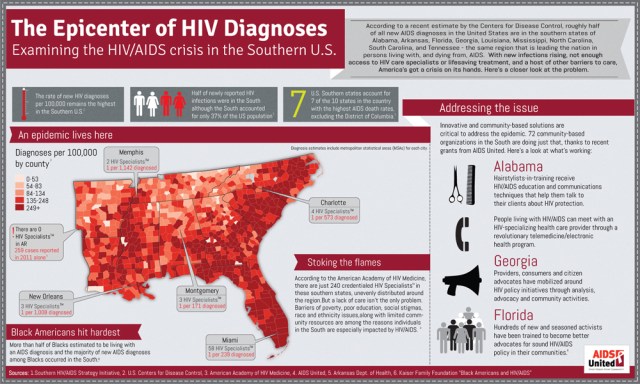
The Epicenter of HIV Diagnoses: Examining the HIV/AIDS Crisis in the Southern U.S.

Source: AIDS United

Posted in Advocacy, Research | Tagged , , | 1 Comment

SASI releases new report, “SASI Update – The Continuing HIV Crisis in the South”

November 28, 2012: SASI has released a new report SASI Update-The Continuing HIV Crisis in the US South—an update to last year’s report that highlights the continued disproportionate effect of HIV in the US South.

Click here to read SASI’s press release, calling for a State of the South Task Force.

Posted in Advocacy, Research | Tagged , , , , | 1 Comment